It is over 90°F outside for the 3rd day in a row. You’d think that because honeybees keep their hive at an average of 95°F throughout the year, that this temperature would be no big deal.

Imagine having a small and nicely air-conditioned house on a day like today. You decide to invite 100 people over for a party. The house no longer feels pleasant- it’s overcrowded, stuffy, and you can tell that the central air is struggling to maintain the temperature. What would you do? While I’d have no shame in telling everyone to go home (and admit this was a terrible idea), maybe you’d offer up hanging out outside.
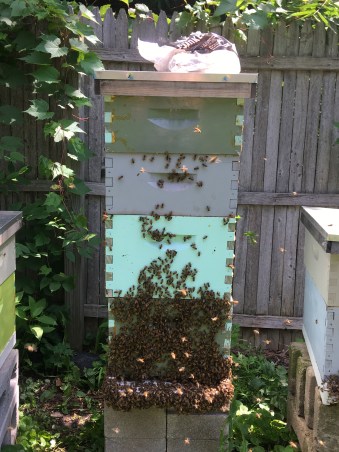
For bees, this is where bearding comes in. At this time of the year, the honeybees may be heading toward their peak in population (up to 80,000 bees in one hive!) In order to regulate the heat on the inside and keep the queen at her preferred temperature, many of the bees form a beard on the front of the hive.
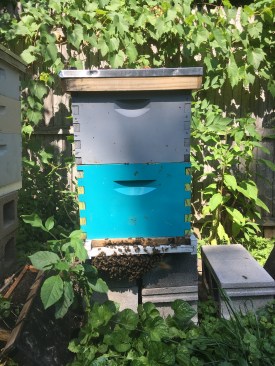
Speaking of hive population, the amount of bees bearding on each hive can give an idea of how well it is doing. This hive, one of my 2 winter survivors, is looking weak considering there is no beard.

To compare, this is our second winter survivor. As you can see, they have an almost full beard. There are more boxes on this colony because they are doing very well with producing honey. Surprisingly, there has been no sign of swarming. The hive on the right is currently empty.

Our third hive, the Carniolans that were purchased as package bees in the spring, have a cute little beard that is growing every hour. These girls are also doing very well.

Our last hive, a nuc we purchased in May, has a much bigger beard than I would have predicted. When I checked them last week, they had 3 capped emergency queen cells and no living queen. The bottom box had frames that were mostly filled up, but the top frames were completely empty.
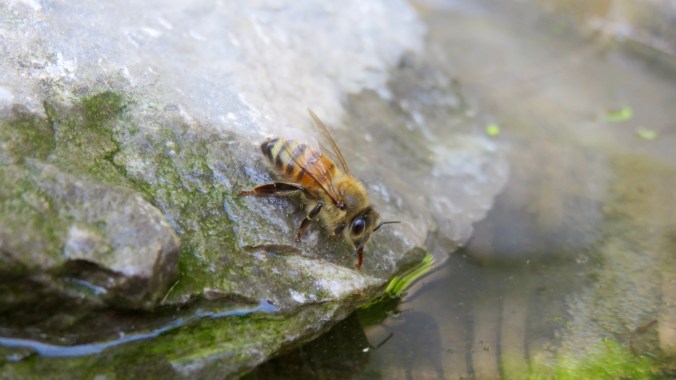
With this crazy heat, this is another perfect opportunity to remind people to provide water for the bees. They are thirsty too!

Interesting fact: Some bees are given the job of collecting water to bring back for evaporative cooling- this includes bringing water, then fanning their wings to move the cooler air through the hive.


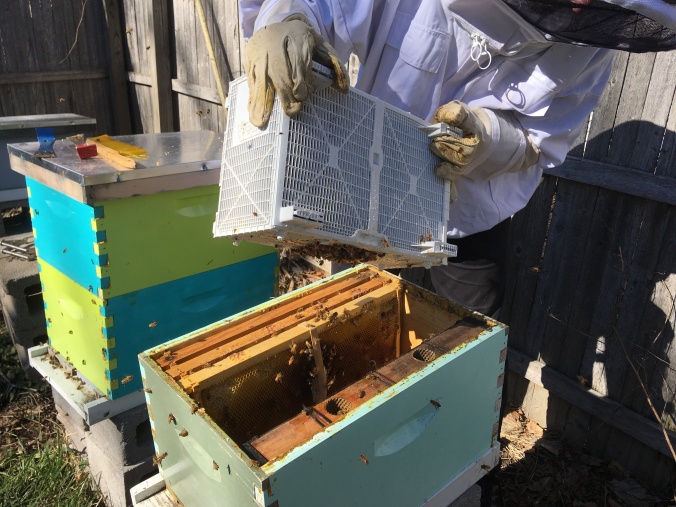
 Do not let the 3rd box, our honey super, fool you into thinking that this one is doing well. This hive was once thriving and full of jerks, but it is now struggling to survive. While I was in there, I saw a queen emerge from a supercedure queen cell. Some of the worker bees noticed this happening and decided to get in there and murder her. Selfishly defying nature, I gently pushed away the worker bees so I could watch the queen. She climbed down the frame, where I’m sure the murder was completed. This hive has a whole lot going on that is all wrong. There are spotty worker cell frames in places where they shouldn’t be. There are several queen cups all over the place. I might downsize them to a nuc box if they don’t get it together soon.
 While hive #1 couldn’t stop swarming, we decided to try hive splitting. We took one of the many frames with a capped queen cell, a few frames of worker bees, and some empty frames, and threw them in one of these boxes. We were pretty sure this was going to be a failure, but figured it couldn’t hurt to try. You may not be able to tell from the photo, but these boxes can only fit 5 frames, where our other hives fit 8. They are really working hard to fill up the second box. I plan to leave them alone until I treat them for mites.
 Ignore the crooked hive cover. These girls were mad at me for messing with them. Dan was stung twice, and I was stung once. I figured I best adjust that cover once they calm down. These are the bees who swarmed between 2 fences back in May. They appear to be doing really well right now. I do not expect to be taking any honey from them this year, but hopefully they will make it through the winter and be awesome for us next season.
 This is what we call success. I harvested a ton of wax from them, and gladly saw that our first honey super is 90% finished with capped honey. They are working hard on the second one.
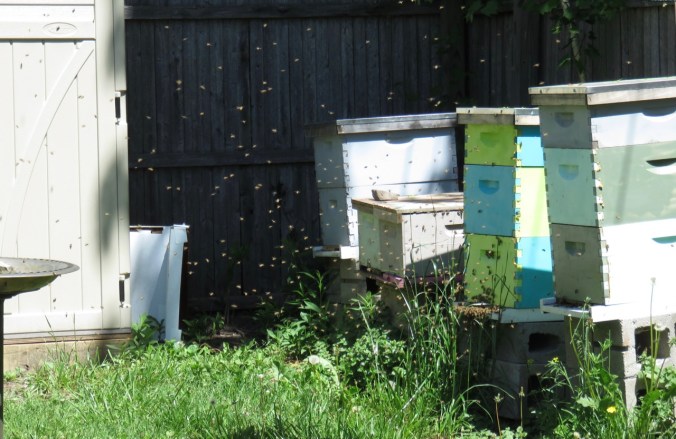
 We “rescued” them by having one of us pound the fence on the wooden side, while the other swept the bees into a box on the wired side.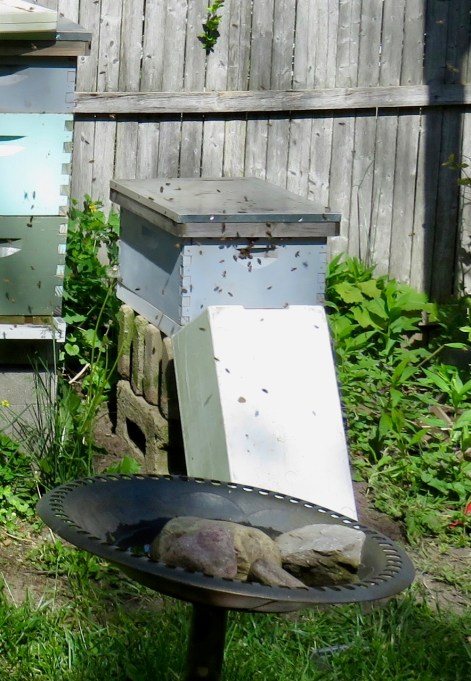
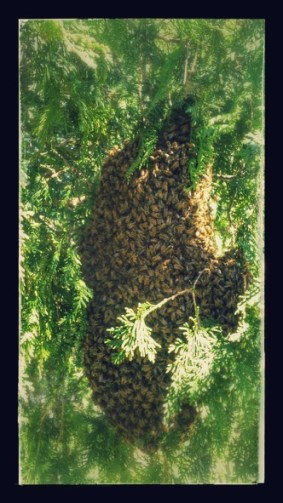
 As a first time swarm catcher, he asked for some advice, but ultimately figured it out on his own. The bees were attached to a branch, so the branch had to be cut off. The girls were placed into a cardboard nuc box, and then we began the fun process of installing them into a deep super.
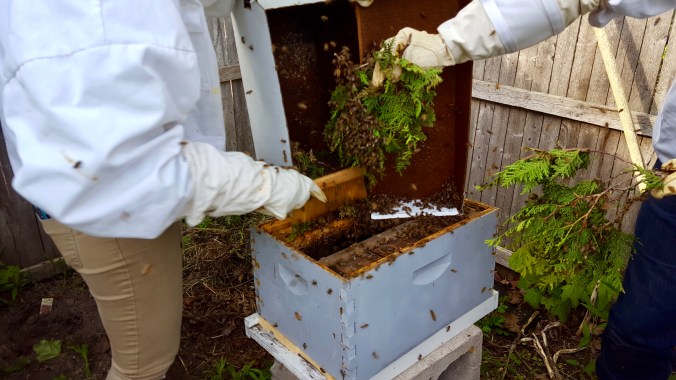 We provided them with some food, a few empty frames, and hoped for the best.
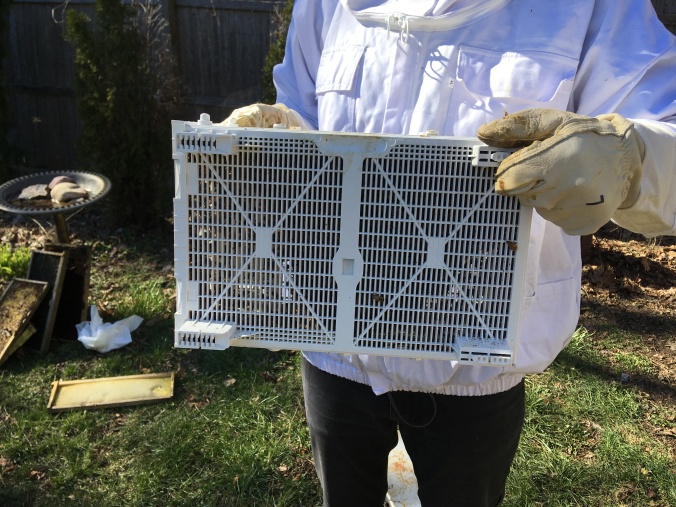
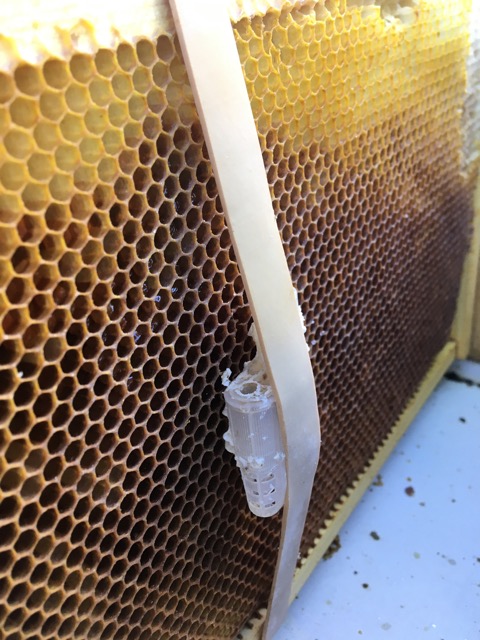
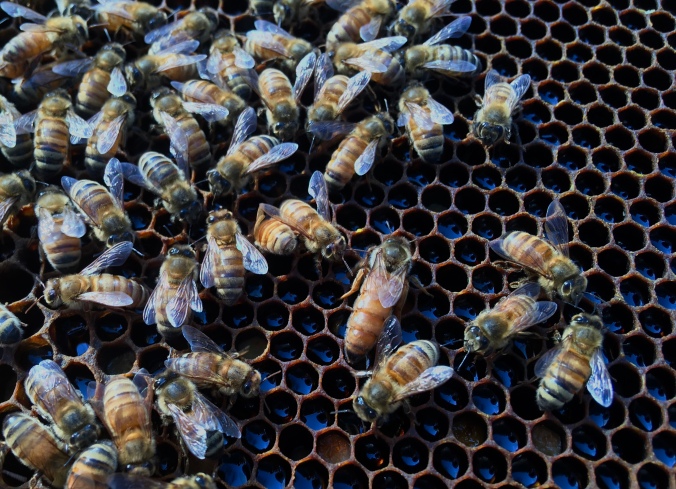 We made this 2 minute visit only to remove the queen cage. Every time we go into the hive and mess around with the frames, we set the worker bees back a few days.
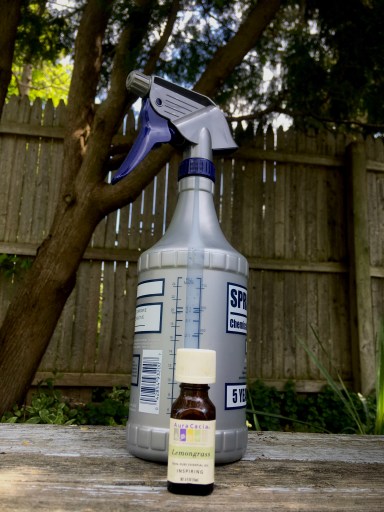
 First, we followed the advice of several YouTube videos and sprayed the box down with sugar water. This helped the bees concentrate more on eating and cleaning each other off rather than attacking a potential enemy.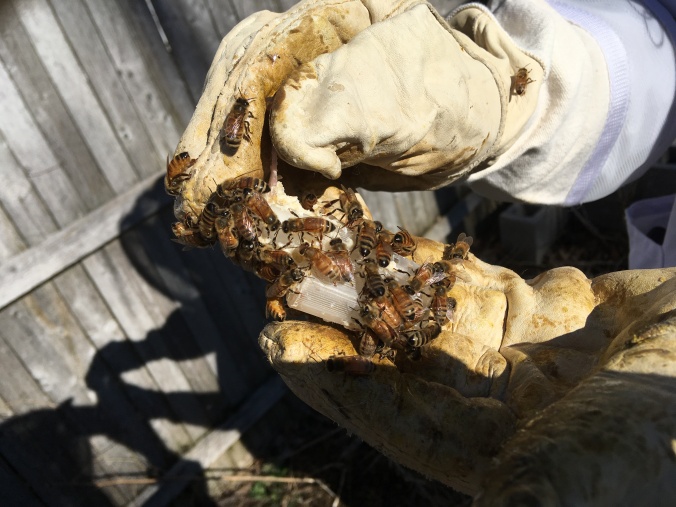
 Besaw's Bee Sauce