2019: Uncatchable swarms
See the top of that tree? That’s how high they went. Every. Time.


For the first swarm, we called Chris Veazey who climbs trees for a living. He graciously climbed this pine tree covered in poison ivy and with no bee jacket.

Alas, they re-swarmed across the street while he was attempting to remove them. Huge kudos for the effort.
We had a total of 7 swarms (that we know of) with every one of them completely out of reach. While swarms are a “good” and “natural” thing, it didn’t help us much. We replaced 3 queens, but they weren’t able to recover.
2019: A new allergy

Dan has had some ridiculous reactions to bee stings; especially if they got him in the foot. It would turn red and swell up like a balloon for days. On one special occasion, while mowing the lawn, he got attacked – his face turned red, he had trouble breathing, and he puked on the way to our (thankfully super close) doctors’ office. He had his first ambulance ride to the emergency room at Strong where it was confirmed he was in anaphylaxis.
I was ready to quit beekeeping because I prefer he not die, but instead, he started going to an immunologist for weekly bee venom injections. These are 97% effective in preventing allergic reactions and they are currently reduced to one shot per month.
2019: My first year doing this:


Do you see her? I found her, smushed her with my hive tool, and watched her insides come out.
I replaced her with a “nice” queen immediately after.
We were able to extract about 10 gallons of honey in July and absolutely none in the fall. The hives were so weak after all the swarming that I combined our hives into 4. I treated them for mites, made sure they had enough food for the winter and closed shop for the season.

Dan got this extra gigantic full-body bee suit for Christmas to prevent the girls from sneaking in for a complimentary sting.
He also promises to wear shoes AND socks in the backyard from now on.
2020: An adventurous year so far
 I gave them a bunch of sugar patties to make sure they were still well fed and hoped for the best. A month later we were down to 2 hives. A week after that, 1 hive.
And then last week, this happened:
 So, so, so, lame. This is the first year since my first year of beekeeping that I lost 100% of our colonies. Three hives appear to have died from mites, and one died from humidity/mold.
Some positive things:
- We completed our first course in the eCornell Master Beekeeping program and start our next course next week
- We sold out of honey thanks to our amazing neighbors
- Without honey, we were able to expand a little and sell lip balm and bath bombs
- We’ve made some new friends
- Our new set of bees will be arriving soon
Interesting fact: Our amazing health insurance, which I am forever grateful for, is the only reason that we can afford both immunotherapy and EpiPens, and therefore continue beekeeping (for now).
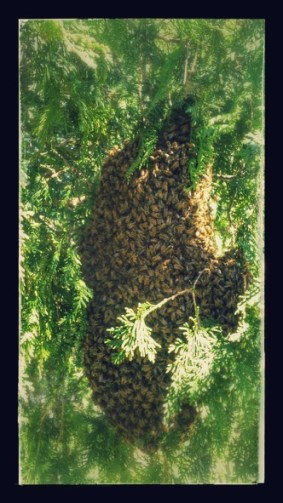
 As a first time swarm catcher, he asked for some advice, but ultimately figured it out on his own. The bees were attached to a branch, so the branch had to be cut off. The girls were placed into a cardboard nuc box, and then we began the fun process of installing them into a deep super.
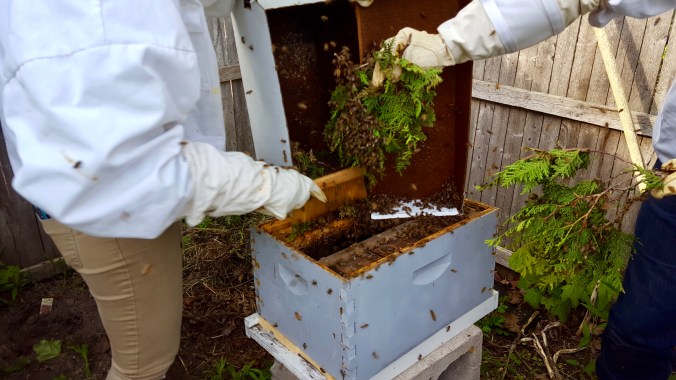 We provided them with some food, a few empty frames, and hoped for the best.
 Besaw's Bee Sauce